
Edwardsville, KS, sits in the Kansas River bottomlands west of Kansas City, where property types range from smaller in-town lots to larger rural tracts with mature hardwood canopies and limited room for equipment. Many sites include silver maples, cottonwoods, and bur oaks that have been left to grow for years, creating concerns around structure, overhang, and clearance near homes, utility lines, and gravel drives. The network of tree care professionals in Overland Park knows how to evaluate aging trees, work around saturated root systems, and open up unsafe limbs so properties stay accessible and better protected through changing weather and difficult terrain.
That is why more Edwardsville property owners are turning to Arbor Tree Care for dependable year-round maintenance.


Prefer to Talk to An Expert?
(913) 214-8444
Why Edwardsville Property Owners Trust Local Professionals to Get It Right
Because they work in this area every day, these professionals understand the flood-prone lowlands, dense mature hardwood cover, and access challenges that come with Edwardsville properties. Each job is completed with equipment and methods suited to saturated soil, narrow gravel lanes, and the storm debris common across this part of the Kansas City metro.
From professional tree pruning solutions along State Avenue, where utility conflicts are common, to full tree removal on rural parcels near Edwardsville Road, where staging and access take extra planning, each project is handled with care and a focus on long-term property function.
If you care about your land, let local contractors help keep your trees healthy, your access open, and your structures better protected in Edwardsville.
Our Tree-Service Services
in Overland Park, KS, Include
A Service Area Designed to Fit Your Edwardsville Neighborhood
Edwardsville’s mix of rural acreage and residential streets, along with limited paved access in many areas, calls for tree care that is tailored rather than generic. Local professionals adjust their approach to fit everything from compact lots to larger properties with multi-trunk hardwoods near sheds and outbuildings.
It makes no difference whether the property is a riverside home near the Kansas River levee corridor, a mid-century house along 110th Street, or a rural homestead near the Edwardsville-Bonner Springs boundary.
From expert stump removal services and tree trimming to emergency storm cleanup and root zone care, services are shaped around the neighborhood and the specific needs of each site.
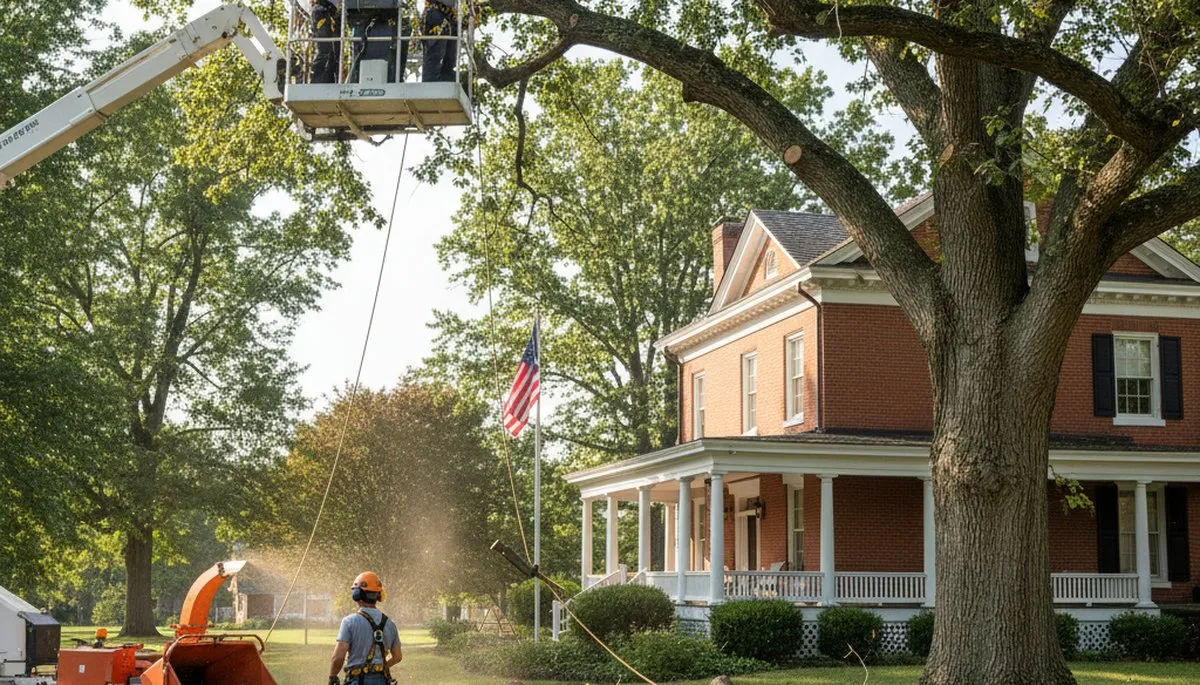
Edwardsville’s Deep-Rooted Canopy, Rooted in History
Edwardsville grew as a farming and railroad community along the Kansas River, and many neighborhoods still have the large shade trees planted by earlier generations. That history is also reflected in aging root systems, weakened trunks, and branches that now press against roofs, fences, and utility lines, shaping the way tree work has to be done today.
Flood-Stressed Root Systems and Saturated Soil Conditions
Many Edwardsville properties, especially those near the Kansas River floodplain and the low areas along Parallel Parkway, face repeated flooding that keeps root zones wet for long periods. Over time, that can lead to root decay and weaker trunk support, which becomes a serious concern for trees near driveways, fences, and buildings.
Local professionals address flood-related stress with root zone aeration, selective crown reduction, and soil improvement strategies that help reduce the chance of long-term instability and unexpected failure during wet weather.
Aging Hardwood Canopy Over Structures and Utility Lines
The area’s mature bur oaks, silver maples, and cottonwoods offer shade and character, but they can also create serious conflicts with nearby structures and overhead lines. When trees are left unchecked for decades, heavy limbs may stretch over roofs or grow into power infrastructure, raising the risk of storm damage and liability.
Crews manage these conditions with directional pruning, crown thinning, and phased limb removal, all adjusted to existing canopy structure and the utility layout along State Avenue and surrounding streets.
Compacted Gravel Access and Limited Equipment Staging
Years of rural use and limited road improvements have left many Edwardsville properties with narrow gravel drives and unpaved access lanes that are difficult for standard tree equipment to navigate.
Trusted crews handle these conditions with compact machinery, hand-rigging methods, and careful debris placement, which improves safety and reduces disturbance during trimming and removal work.
Severe Midwest Storm Events and Wind Damage
Kansas sits in a storm-prone corridor, so strong thunderstorms, straight-line winds, and occasional ice can quickly split limbs, break trunks, or topple trees across Edwardsville properties.
Experienced teams respond with aerial lift equipment, hand saws, and sectional removal methods to clear debris safely and evaluate damage, even when fallen material makes access difficult after a storm.
Tick and Insect Pressure in Wooded Residential Areas
Edwardsville’s tree cover and wooded corridors can make pest issues harder to ignore. Properties near the Kansas River often see more tick activity and insect pressure that can speed up tree decline if left unchecked.
Local pros provide targeted reliable insect management solutions and canopy monitoring, focusing on early detection and practical treatment based on each property’s exposure and tree density.
If you want year-round care for your Edwardsville property, call (913) 214-8444 to request a free quote from a local professional. Every property needs safe, workable access. Let Arbor Tree Care help maintain yours.
Launch your tree service project today!

Tree Services in Edwardsville, KS: Care for Every Season
From routine trimming to urgent storm cleanup, local professionals help keep properties stable, maintained, and ready for changing weather throughout the year:
Routine Tree Trimming and Pruning in Edwardsville, KS
- Crown thinning for mature bur oaks and silver maples along residential streets near 110th Street, helping reduce wind resistance and improve light reaching lower landscape areas.
- Utility line clearance trimming along State Avenue and Parallel Parkway, where long-term growth often brings branches into conflict with overhead lines and related infrastructure.
- Structural pruning for young trees on newer residential lots near the Edwardsville Road area, setting a stronger branching pattern before problems have time to develop.
- Seasonal canopy maintenance for properties near the Kansas River corridor, where fast-growing cottonwoods and silver maples often need more frequent attention than typical suburban trees.
- Deadwood removal and hazard limb pruning across rural tracts and in-town properties, reducing the chance that brittle or weakened branches become a problem during storm season. Nearby communities need similar care, and tree pruning professionals in Bonner Springs, KS handle comparable canopy concerns just east of Edwardsville.
Plan trimming before spring storms arrive to lower hazard-limb risk and keep canopy structure in better shape across your Edwardsville property.
Tree Removal Services in Edwardsville, KS
- Hazardous tree removal for flood-stressed cottonwoods and silver maples near homes, where repeated saturation has weakened root support over time.
- Storm-damaged tree removal after severe weather, including split trunks and uprooted trees that block driveways, sheds, or access lanes on rural lots.
- Dead tree removal for standing snags and drought-stressed hardwoods that create falling hazards near fences, lines, and high-traffic spaces on Edwardsville properties.
- Multi-stem cluster removal on acreage where volunteer growth or invasive species has formed dense thickets that compete with better landscape trees.
- Removal near structures and fences that requires sectional cutting and hand-rigging to protect outbuildings, fence lines, and underground utilities often found on older residential lots.
Prompt tree removal can help limit damage to structures and fences, reduce liability concerns, and free up space for healthier planting plans on Edwardsville properties.
Stump Grinding and Cleanup in Edwardsville, KS
- Below-grade stump grinding for large oak and maple stumps left after hazard removals, removing trip hazards and making lawn restoration easier.
- Surface root grinding for stumps with wide lateral root systems that interfere with mowing, foot traffic, and future landscape work on Edwardsville lots.
- Multi-stump clearance projects on rural acreage where land clearing or orchard removal has left several stumps that need to be processed across open ground.
- Debris cleanup and chip removal after stump grinding, leaving the area neat and ready for seeding, sod, or new landscape beds.
- Stump treatment for sprout suppression on fast-regrowing trees like silver maple and cottonwood, helping stop new shoots from complicating lawn care and future planting. Property owners in nearby communities deal with similar situations, and tree removal contractors in De Soto, KS regularly manage comparable post-removal stump conditions throughout the western Kansas City corridor.
Grinding stumps soon after removal helps stop regrowth, removes pest habitat, and returns usable ground space to Edwardsville homes and rural properties.
Emergency Tree Services in Edwardsville, KS
- Storm response for fallen trees that block driveways, structures, or roadways after severe thunderstorms or straight-line winds, which often affect Edwardsville’s exposed rural and riverside properties.
- Emergency limb removal for hanging or partially attached limbs over roofs, vehicles, and utility lines after storms, when immediate control is needed.
- Post-ice storm canopy clearing for properties where ice buildup has split major branches or uprooted shallow-rooted trees along low-lying areas near the Kansas River.
- 24-hour hazard tree assessment for sites where trunks or root plates have been left unstable and need fast professional review before the situation worsens.
- Emergency access lane clearing for rural properties where fallen trees have blocked unpaved drives or field routes, affecting normal use and emergency vehicle access.
Fast emergency response limits further damage, gets access restored sooner, and makes sure storm-damaged trees are handled safely before the next weather system moves in.